Source 12 pins microneedle cartridge for Skin Care, Salon, Home
Explore 30 listings for the 12 pins microneedle cartridge designed for skin management and facial treatments. Buyers can compare specifications like needle count, sterilization methods, and compatibility with Dr.Pen A1 machines to find suitable options for salon or home use.
Key considerations
Products List






Comprehensive Sourcing Guide
Strategic Sourcing Guide for 12 Pins Microneedle Cartridges
The global demand for professional and home-use microneedling devices has driven a significant expansion in the market for compatible consumables, specifically the 12 pins microneedle cartridge. For B2B procurement professionals, sourcing these components requires a nuanced understanding of technical compatibility, regulatory compliance, and supply chain reliability. The 12-pin configuration represents a specific balance between treatment coverage and precision, making it a critical SKU for clinics, salons, and device manufacturers. This guide outlines the essential factors for evaluating and procuring these cartridges, grounded in verified product attributes and industry standards.
Technical Specifications and Compatibility Architecture
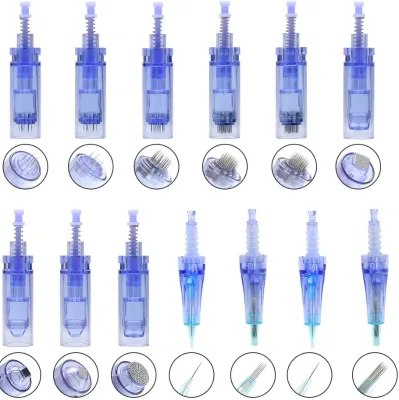
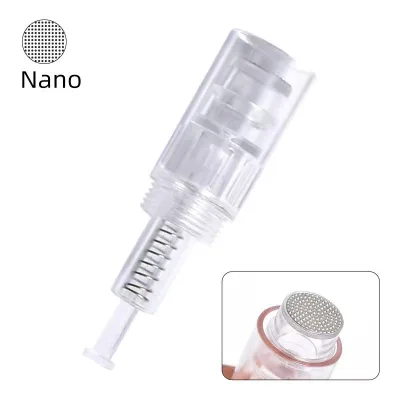
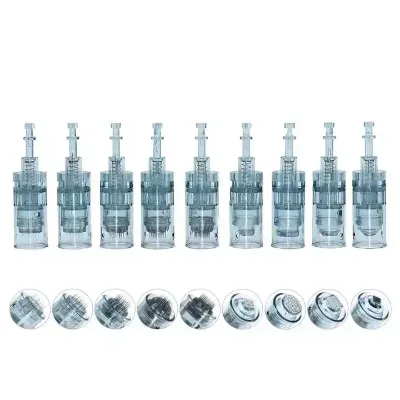
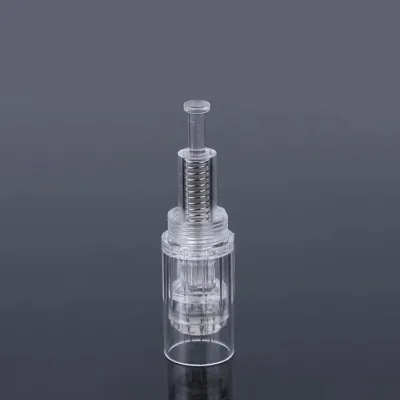
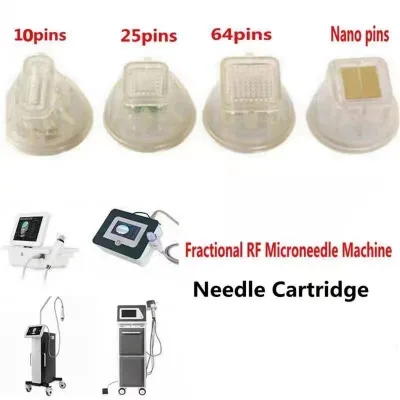
The primary technical differentiator for a 12 pins microneedle cartridge is its needle configuration, which dictates the depth of penetration and the surface area covered per pass. Based on observed product data, the standard needle counts for this category include 9, 12, 24, 36, 42, and various nano configurations. The 12-pin variant is often selected for its ability to treat larger facial areas or specific body zones without the excessive trauma associated with higher pin counts like 36 or 42.
Material composition is a non-negotiable specification. The supplied data confirms that high-quality cartridges are constructed from Stainless Steel. This material choice ensures the necessary rigidity for consistent needle insertion and the corrosion resistance required for repeated sterilization cycles or single-use protocols. The physical dimensions of the single package are typically standardized, with observed data indicating a single package size of 42x28x21 cm, which is crucial for logistics planning and warehouse storage calculations.
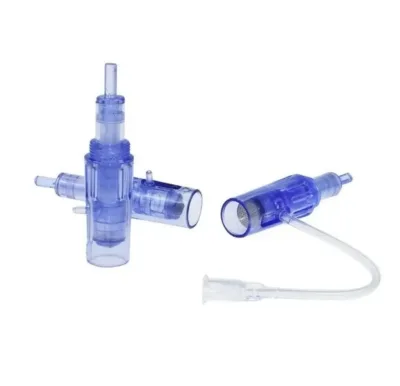
Compatibility with the host device is the most critical technical constraint. The market data explicitly identifies the "Dr.Pen A1 Machine" as a primary usage target. Furthermore, the "Type Pen" attribute lists a broad range of compatible models, including A1, A6, A7, M7, M8, and M5. Procurement teams must verify that the specific cartridge model number aligns with the mechanical interface of the buyer's inventory. The product model is frequently referenced as "derma pen needle cartridge" or "dermapen needle," but the specific pin count (12pin) must be cross-referenced against the device's manual to prevent mechanical failure or needle breakage.
Regulatory Compliance and Certification Verification
In the medical and aesthetic device sector, certification is not merely a marketing asset but a legal prerequisite for market entry. The supplied facts indicate that compliant products in this category typically hold Medical CE, ISO13485, RoHS, and PSE certifications. These standards address different aspects of safety and quality. ISO13485 is the international standard for medical device quality management systems, ensuring that the manufacturing process is controlled and consistent. The Medical CE mark indicates conformity with health, safety, and environmental protection standards for products sold within the European Economic Area.
Sterilization methods are equally vital for compliance. The data specifies that these cartridges are "E.O. Gas Sterilized" or "100% E.O. Gas Sterilized." Ethylene Oxide (E.O.) gas is a standard method for sterilizing heat-sensitive medical devices. Buyers must verify that the sterilization certificate accompanies the shipment and that the residual gas levels meet the safety thresholds defined by the relevant regulatory bodies. The presence of "Medical CE" certification suggests the product is intended for professional or medical-grade applications, distinguishing it from general beauty tools that may lack rigorous sterilization protocols.
Additionally, the RoHS (Restriction of Hazardous Substances) certification ensures that the stainless steel and any other materials used do not contain restricted hazardous substances, which is a requirement for electronics and medical devices in many jurisdictions. The PSE mark, often associated with the Japanese market, indicates compliance with Japanese electrical safety standards, which may be relevant if the cartridges are part of a larger electrical system or if the buyer intends to distribute in Japan.
Cost Drivers and Pricing Dynamics
The pricing structure for 12 pins microneedle cartridges is influenced by several variable factors. The observed listed price range in the market spans from $0.15 to $89.99 USD. This wide disparity indicates that price is not solely a function of the needle count but is heavily dependent on the packaging format, certification level, and order volume. The lower end of the spectrum likely represents bulk wholesale units with minimal packaging, while the higher end may reflect single-item retail packs with comprehensive certification documentation and aseptic packaging.
The Minimum Order Quantity (MOQ) is another significant cost driver. The observed MOQ range is between 1 and 500 units. For small clinics or startups, an MOQ of 1 allows for trial orders, but the unit cost will be higher. Conversely, large distributors or device manufacturers can leverage the higher MOQs to secure significantly lower per-unit costs. The "Selling Units" attribute notes that products are often sold as "Single item" or in boxes containing 50 pieces ("50PCS/Box"). Buyers should calculate the total cost of ownership, including shipping and handling, which can be substantial given the single gross weight of 2.000 kg per package.
Customization is listed as "Available," which introduces a variable cost element. OEM (Original Equipment Manufacturer) and ODM (Original Design Manufacturer) services allow buyers to brand the cartridges with their own logos or modify the packaging. While this adds value for brand differentiation, it typically requires higher MOQs and longer lead times, impacting the overall cost structure. The "Supply Type" attribute confirms that OEM/OBM/ODM options are available, suggesting that buyers can negotiate terms based on their volume and branding needs.
Typical Applications and Target Markets
The application scope for 12 pins microneedle cartridges is diverse, catering to both professional and consumer markets. The "Application" attribute lists "Skin Management," "Salon," and "Home," indicating a dual-use potential. In professional settings such as dermatology clinics and beauty salons, these cartridges are used for "Facial Neck" treatments, targeting areas like the face, lips, neck, and throat. The "Target Area" data further specifies usage on the body, head, and nose, highlighting the versatility of the 12-pin configuration for treating various anatomical regions.
The "Efficacy" claims associated with these products include "Wrinkle Removal & Skin Beauty." The mechanism relies on creating micro-channels in the skin to stimulate collagen production and enhance the absorption of topical serums. The "Advantage" of "Small Skin Damage" suggests that the 12-pin design is optimized to minimize trauma while still achieving therapeutic results. This makes it suitable for "Adult" users and "Unisex" applications.
For home-use devices, the "Portable" nature of the cartridges is a key selling point. The "Type" is described as a "Derma Rolling System," although the specific "12 pins" configuration often refers to a cartridge for a pen-style device rather than a traditional roller. The "Usage" is explicitly "for External Use," and the "Side Effect" is listed as "No," implying a low-risk profile when used according to instructions. However, buyers should remain aware that "No Side Effect" is a general observation and actual outcomes depend on user technique and skin condition.
Supplier Evaluation and Quality Control Protocols
Evaluating suppliers for microneedle cartridges requires a rigorous due diligence process. The "Place of Origin" is consistently listed as "Shanghai, China" or generally "China." While this provides a geographic baseline, buyers should verify the specific factory location and audit its quality management systems. The presence of ISO13485 certification is a strong indicator of a supplier's commitment to quality, but it should be validated against the current certificate status.
Quality control should focus on the needle integrity and sterilization efficacy. The "Standard" attributes list various pin configurations (1pin, 3pin, 5pin, 7pin, 9pin, 12pin, 36pin) and needle types (roundnano, nano-R, nano-S). Buyers must ensure that the 12-pin cartridges received match the ordered standard exactly. The "Product Name" variations, such as "Derma Pen Needle Cartridge" or "Dr Pen Cartridge," should be checked against the technical drawings to ensure mechanical fit.
Packaging is a critical component of quality control. The data shows variations in "prod_packing," including "Box-Packed," "Aseptic Packaging," and "Bag." Aseptic packaging is essential for maintaining the sterility of the product until the point of use. Buyers should inspect the packaging for integrity, ensuring that the seal is unbroken and that the expiration date is clearly marked. The "Single gross weight" of 2.000 kg per package should be verified during the receiving process to ensure that the shipment contains the correct quantity and that no damage has occurred during transit.
Long-Term Procurement and Supply Chain Considerations
Sourcing 12 pins microneedle cartridges is not a one-time transaction but a continuous supply chain relationship. The "Customization" and "Supply Type" attributes suggest that long-term partnerships often involve branding and volume commitments. Buyers should consider the "Lead time" implications of customization, as OEM orders typically require longer production cycles than off-the-shelf purchases.
Inventory management is crucial given the "Disposable" nature of the product. While the "Set" attribute is "Not set," indicating that these are single-use items, buyers must plan for regular replenishment to avoid stockouts in clinical settings. The "Number of Needles" options (9, 12, 24, 36, 42, Nano Square, Nano Round Needles) suggest that a diverse inventory may be necessary to meet varying patient needs. A 12-pin cartridge is just one part of a broader SKU strategy.
Finally, buyers should monitor the "Process" attributes, such as "Natural Product Extraction," which may be relevant if the cartridges are marketed as part of a holistic skin care regimen. However, for the cartridge itself, the focus should remain on the stainless steel construction and the sterilization process. As the market evolves, keeping abreast of changes in certification requirements, such as updates to CE or ISO standards, will be essential for maintaining compliance and market access. By adhering to these procurement guidelines, buyers can secure high-quality 12 pins microneedle cartridges that meet the rigorous demands of the modern aesthetic industry.
FAQs
What certifications do 12 pins microneedle cartridges hold?
These cartridges typically hold Medical CE, ISO13485, RoHS, and PSE certifications. This ensures compliance with international medical device quality standards and safety regulations for both professional and home use applications.
How are the needles sterilized before packaging?
The needles are sterilized using 100% Ethylene Oxide gas. This method ensures the product is safe for external use on sensitive areas like the face and neck without causing side effects.
Which Dr.Pen models are compatible with these cartridges?
These cartridges are designed for use with Dr.Pen A1 machines and other models including A6, A7, M7, M8, and M5. Buyers must verify the specific model number to ensure mechanical compatibility.
Can I customize the packaging or branding for bulk orders?
Yes, customization is available for OEM, OBM, and ODM requests. Buyers can negotiate branding options, though this may require higher minimum order quantities and specific lead times.
What is the minimum order quantity for these cartridges?
The minimum order quantity ranges from 1 to 500 units depending on the supplier. Lower MOQs allow for trial orders, while larger volumes often secure better per-unit pricing.
Where are these microneedle cartridges manufactured?
The products originate from Shanghai, China. Buyers should verify the specific factory location and audit quality management systems to ensure consistent production standards.